


A career defined by “putting the horse first”
Trainer Bev Strauss’s passion isn’t racing, it’s horses
 The Biz
 August 11, 2026

Bev Strauss has spent more than three decades training racehorses, but if you ask what has defined her career, the answer has little to do with the winner’s circle.
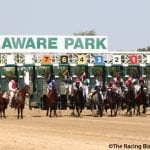
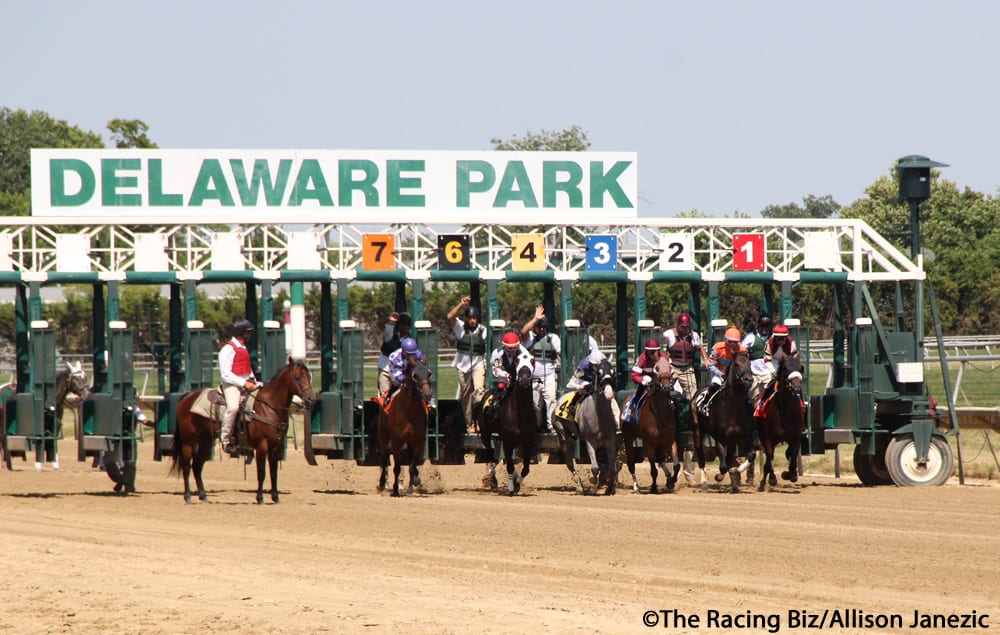
For Strauss, who first saddled a winner in 1992 and co-founded MidAtlantic Horse Rescue in 2002, the race has always extended far beyond the finish line. Whether she is campaigning a horse at Delaware Park or placing a retired runner into a second career, the guiding principle is the same: the horse comes first.
That philosophy is evident throughout the small stable she operates with her husband, Tom, at Delaware Park.
This article contains affiliate links. If you click and buy, we may earn a commission at no extra charge to you.
Pick up reliable and rewarding tickets for major events!
“We always put the horse first,” Strauss said. “If they don’t look like they’re going to run at any kind of a decent level, we rehome them as riding horses. I keep track of all of our babies.”
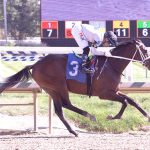
That mindset was on display again recently. Soo Handsome, a hard-knocking maiden Strauss had already earmarked for a second career after earning his diploma, finally picked up his first victory when he was elevated via disqualification in an Aug. 1 race at Delaware Park. It was a satisfying breakthrough for a horse Strauss had long planned to retire to a sport horse home once his racing career was complete.
“He’s totally sound and he’s a big, good-looking horse,” she said before the race. “We’ll plan on retiring him and find him a good home as an event horse or a sport horse.”

Strauss appeared on the July 31 episode of the Midlantic Racing Today podcast.
That willingness to see value beyond the racetrack traces back to Strauss’ childhood in rural Bedminster, New Jersey. Horse-crazy along with her two sisters, she rode bicycles to a local stable, worked in exchange for riding lessons and eventually joined Pony Club, where she was mentored by accomplished horsemen and women who emphasized horsemanship over ribbons.
She briefly considered veterinary school, was accepted to law school, and ultimately chose neither. Horses remained the constant. She met her future husband while galloping horses, bought a yearling with him before they were married and eventually began training on their own. After stepping away to raise a family, the racetrack pulled them back.
The biggest turning point, though, came away from racing.
In the early 2000s, Strauss and fellow trainer Ginny Cole became painfully aware that Thoroughbreds were leaving Delaware Park each Sunday for the New Holland auction, where many were destined for slaughter. Believing they could no longer ignore what they were seeing, they launched MidAtlantic Horse Rescue with little more than determination, a few acres of pasture and enough money to buy three horses.
“We just decided that we would do something,” Strauss recalled. “We jumped in and said, ‘Okay, we better get busy.'”
What started as a leap of faith has become one of the country’s most respected Thoroughbred aftercare organizations, placing roughly 100 horses annually while helping hundreds more pass safely from racing into second careers. Just as importantly, Strauss has witnessed the culture change around her.
“When we first started, people didn’t want to hear about aftercare,” she said, adding, “Everyone thinks about it now… they realize it’s part of the industry and it’s part of our responsibility.”
She credits that evolution to owners, trainers, racetracks like Delaware Park and the Maryland tracks and organizations such as the Thoroughbred Aftercare Alliance, but also to racing fans, whose concern for horses after their racing days helped push aftercare into the mainstream.
Strauss is quick to acknowledge there is more work to do. She wants additional funding, more accredited farms and better traceability so horses can be followed throughout their lives. But she believes the industry has made meaningful progress.
“The whole landscape of aftercare has changed,” she said. “Now you rarely see Thoroughbreds at New Holland. If you do see them, they’re years removed from the racetrack. That’s been really rewarding to see that change.”
Despite her decades of rescue work, Strauss still lights up when talking about the horses in her own barn. She hopes they win races, certainly. But winning has never been the only measure of success.
She smiles when she receives photos of former runners jumping, trail riding or carrying children. She points to My Danny Boy, a now-eight-year-old Golden Lad gelding she retired in 2024. He now spends his days happily carrying his new owner’s daughters in Maryland.
“Just to see him out there, happy and well cared for and loved,” Strauss said. “That’s what I want for all of our horses. Now if we can win some races in the meantime….”

Pick up reliable and rewarding tickets for major events!
LATEST NEWS