



In Maryland, recent changes “just the start”
Wagering product, sponsorships to get attention
 Frank Vespe
 August 17, 2026

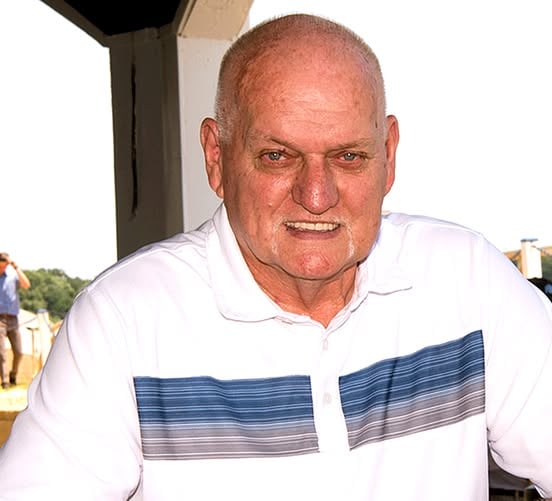
The announcement of a new Thoroughbred Championship Series that includes the Kentucky Derby and Belmont Stakes but not the Preakness raised plenty of questions in Maryland racing circles earlier this month. For TK Kuegler, a Maryland Jockey Club board member and president of the Maryland Million board, the development is less a threat than another reminder that racing needs to embrace change.
“It would have been great if somebody would have gave us a call and had a conversation about it,” Kuegler said of the new series. “But frankly, no one gave us a call and had a conversation about it.”
Kuegler appeared on the Midlantic Racing Today podcast August 12.
This article contains affiliate links. If you click and buy, we may earn a commission at no extra charge to you.
Pick up reliable and rewarding tickets for major events!
Still, Kuegler said he prefers to focus on what the development could mean for racing rather than what it might mean for Maryland. Racing’s moment in the sun was, he said, “extremely positive.”
“If there is more energy being put into racing, it’s a good thing,” he said. “If more people are talking about it, it’s a good thing, full stop.”
Kuegler does not believe the omission of the Preakness from the series threatens the Triple Crown.
“The Triple Crown is the Triple Crown,” he said, adding, “I don’t think it changes the Triple Crown in any way. The Triple Crown is still the Triple Crown.”
More importantly, he said that the recently announced moving of the Preakness to 22 days after the Kentucky Derby and signing of a deal with NBC to continue to broadcast the Middle Jewel aren’t the end of the story. Maryland racing, he said, has more changes coming.
“We’re not done doing things,” Kuegler said. “This is just the start.”
The philosophy, he said, is not to be afraid of trying ideas that might fail.
“Some of those aren’t going to work, and that’s okay,” Kuegler said. “But doing nothing is a risk, too, and we know what that looks like.”

For Maryland racing, one area in need of attention is the wagering product. Kuegler said the state needs a serious discussion about takeout as well as the types of bets being offered.
“I think the Maryland product needs to be better,” he said. “I think there has to be a serious talk about takeout. I’m speaking as a guy on the board of the Maryland Jockey Club, so I’m I’m here to tell you I’m advocating that we do a serious talk about that, and that is happening. That talk is happening.”
He also questioned whether some existing wagers are sufficiently compelling.
“Does the jackpot Pick 6 that exists today, is that interesting? No, in my opinion, it’s not an interesting betting product,” he said.
Among the wagering issues being examined are computer-assisted wagering operations, or CAWs. Retail bettors generally lament the presence of CAWs in wagering pools, given the advantages they possess, but at the same time, racetrack execs and horsemen are loathe to give up the handle they represent.
Kuegler said he has had “very distinct conversations” with Maryland Jockey Club CEO Bill Knauf about the issue and that discussions remain ongoing.
“Fixing and curbing unfair advantages for any gambler, CAW or not, I think is a key aspect, and those discussions are ongoing,” he said.
Making the wagering product more player-friendly could help improve TMJC’s financial outlook, and improving the financial picture, Kuegler argued, could help solve another of racing’s persistent problems: field size.
“When we lose money today, when the Maryland Jockey Club loses money today from an operation standpoint, they have to borrow from the horsemen,” he said. “And borrowing from the horsemen means you’re borrowing from the purse account, and if you borrow from the purse account, it’s harder to attract horses.”
That can become a vicious cycle, he said, but increasing the number of horses in races could have an immediate effect on wagering.
“Nothing helps the betting product more than changing the field size,” Kuegler said. “If we add on average 1.4 more horses than we have right now running on a given day, our handle goes up something like 18% just from that.”
Kuegler acknowledged that attracting horses is difficult throughout the industry.
“Every racetrack is struggling to get horses to run,” he said. “But I think there are ways to help that.”
Kuegler expects more announcements from Maryland racing in the coming months. He said something should emerge after racing returns to Maryland following the summer break, with another announcement surrounding Maryland Million.
“I think you’ll hear a nice announcement around Maryland Million, too, that’s cooking up,” he said. “Something in September and something in October I think will both happen.”
He also expects announcements regarding corporate sponsors for the new Pimlico, with discussions already well underway.
“I think bringing new names to the table is always a good thing,” Kuegler said.
As for the new Pimlico itself, Kuegler said the grandstand is expected to be completed in late fall or early 2028, with the 2027 Preakness nevertheless scheduled for the new facility.
And while the 2027 Preakness will be held without the permanent grandstand, Kuegler does not view that as necessarily a problem.
“In the modern world, the temporary grandstands and temporary structures often are as good as the permanent ones,” he said. “So it’s not necessarily a terrible thing.”

Pick up reliable and rewarding tickets for major events!
LATEST NEWS






William Lindes
18th Aug 2026Showing morning workouts would increase handle. And it would add to the prestige of the track. I asked Dan Illman what he thought about the ideal and got a polite brush off. What do I know; I still wager on horse racing. Though rarely at Laurel.
The Biz
20th Aug 2026Wait…. you’re the guy still wagering on racing?!?! (Sadly, it’s coming to this…) I have no idea what that idea would cost, but in a vacuum, I like it. One challenge is that many starters at Lrl are based elsewhere, particularly at Fair Hill, so it would be added but still very incomplete data.