


Payne putting the puzzle pieces together
Ingleside Training Center owner known for work with young horses
 Nick Hahn
 June 22, 2026

Curtis Beale “Woodberry” Payne knows the many little parts of racing. He uses his wide background of handling horses in a very narrow but critical window of Thoroughbred development: the early days.
“When they come in as weanlings, they’re middle schoolers,” explained Payne. “When we start breaking them in the fall and going into the spring, they’re high schoolers. By the time we have them breezing they’re kind of at the college stage ready for graduation.”
At the Ingleside Training Center, located literally in the front yard of James and Dolley Madison’s Montpelier, Payne makes green young racehorses racetrack-ready. Of the 72 Thoroughbreds he currently has on the grounds, 70 are two or younger.
This article contains affiliate links. If you click and buy, we may earn a commission at no extra charge to you.
Pick up reliable and rewarding tickets for major events!
“Usually the springs (of their two-year-old year) are when they start to blossom and you see the transitions in their body, the change of muscle tone and the mental attitude,” continued Payne. “I breeze eighths a lot to start to build up bone density, but then the light switch goes on and they say, ‘Oh, this why we’re doing this.'”
He uses all of his background, from his early show horse competitions to present-day steeplechase oversight, to develop young horses. But he’s not solely about the youngsters.
“I need the action of the training, and that makes Colonial great because it gives me some racetrack,” Payne said of the upcoming Colonial Downs meet. “I always want to be around a racetrack.”
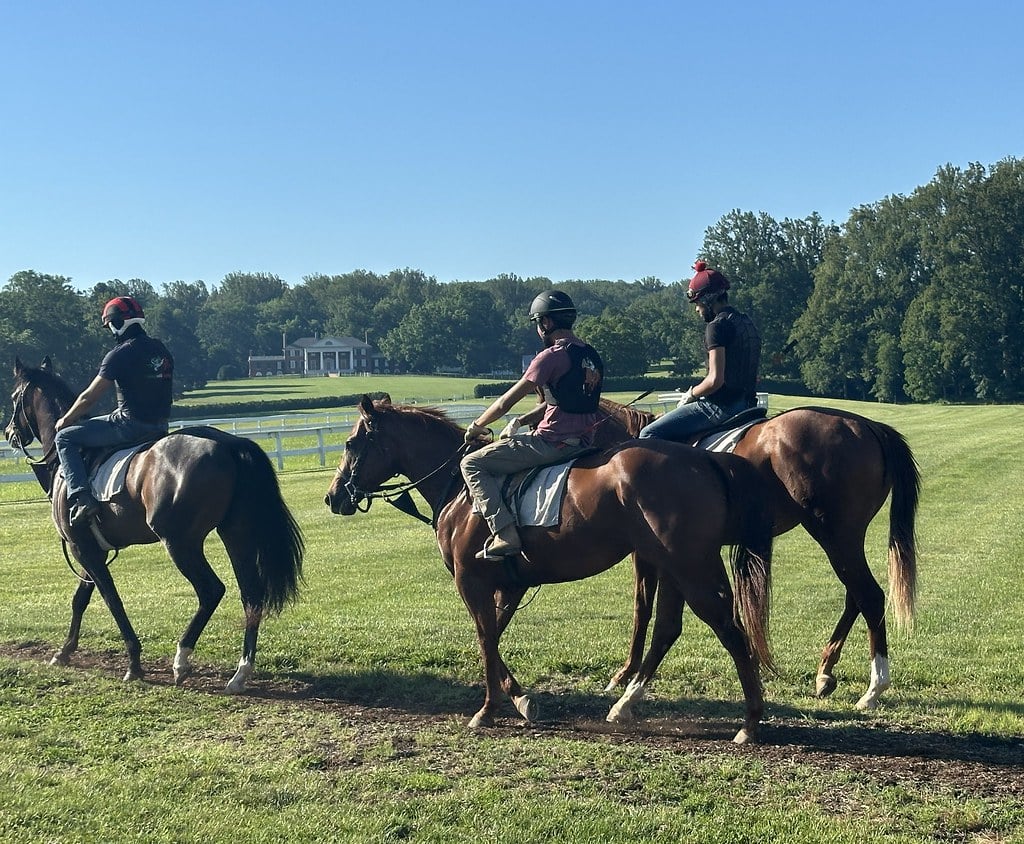
While Woodberry’s link to Montpelier doesn’t go back to the Madisons, it does go back to one of its most prominent owners, Marion duPont Scott, the equestrienne who owned steeplechase champion Battleship, as well as flat racers Mongo, Soothsayer, and Proud Delta. Mrs. Scott was the final private owner of Montpelier, and she bequeathed it to the National Park Service.
When Woodberry’s mother, a medical technician, came to see Scott, Woodberry would tag along.
“I’d come out here with my mother,” Payne recalled. “The doctors would come to her. She wouldn’t go to them, and, of course, I went to the races here, as a small, small child, and remember… It was a party for the community, and everything was free.”
Today, Payne’s focus is on horse racing’s future, working with young horses to get them to the racetrack.
“A big, high hip, a deep girth, a good shoulder but not too heavy,” Payne answered when asked what he likes to see in incoming prospects. “I’ve learned to deal with some of the conformation flaws about toeing in and toeing out, just a well-balanced athlete.”
Like young athletes in any sport, success doesn’t arise from just the physical.
“Of course, one that’s got plenty of sense is ahead of the game from the get-go,” Payne said.
While young horses are Woodberry’s primary occupation today, it is from the show horse world that his iconic fourth name comes. During a trophy presentation at a horse show, someone recognized him as a student at Woodberry Forest School and shouted, “Hey, kid from Woodberry.” At 14 years old, the youngster already known by three names acquired a fourth.
The original Ingleside Training Center was owned by William Garth, who trained 1920 Kentucky Derby winner Paul Jones and ’23 Derby runner-up Martingale. Payne worked and rode horses at Ingleside for subsequent owners Jack and Missy Sanford for a decade before the property was sold in the mid-1990s.
Payne acquired the business along with the Ingleside name and moved back to Montpelier, where a steeplechase barn sat vacant most of the year near Scott’s six-furlong training track, complete with a chute that can extend the distance to a mile.

Woodberry is not the first Payne at Montpelier. Dolley Madison’s son from her first marriage, John Payne Todd, known as Payne, was two when Dolley and James married. Later, believed to be an alcoholic, Payne fell into disrepute because of gambling debts and other troubles before dying of typhoid fever.
“I’m trying to make up for that,” Woodberry joked.
Though Payne derives a sense of accomplishment from his longtime role in Thoroughbred racing, often the results of his work are not apparent until long after his pupils leave Montpelier.
That’s in part because the horses continue to grow and develop long after leaving Montpelier. It’s also because races are about more than natural talent.
“That intangible, the heart, which we can’t measure, and you never find it as a rule until you get out there in the heat of competition,” Payne observed. “I’ve had horses that were miserable to train and would breeze a half-mile in :54 in the morning, but you put them in a race in the afternoon and they’re a different horse. Unfortunately, there are more morning glories that are fabulous in the morning and don’t show up in the afternoon.”
Payne’s unique role of developing the youngsters and then passing them on to other trainers doesn’t bring much recognition in the race charts, but it helped provide stability during the years Colonial Downs was shuttered from 2013 to 2019. During that period, Payne watched fellow horsemen struggle, an experience that helped inspire the Virginia Certified Residency Program.
Payne uses a variety of methods to get horses ready for the racetrack. Sometimes his solutions seem unconventional, but all start from a similar place: listening to the horse.
One difficult horse refused to calm down.
“I wound up putting the horse in the hackamore [bitless headpiece],” Payne recalled. “And he said, ‘Thank God y’all got that out of my mouth.’ He turned into a pussycat.”
Another assignment required a different approach.
“They couldn’t get him to train,” Payne recalled. “He would freeze up and stuff. I just started walking him around, kept away from the racetrack, jumped some logs, played with him, let it go up and down hills and all of a sudden, he was just, ‘Oh, thanks for the freshener Now I’m ready to go back to work.’”
One of Payne’s pupils, the mid-1990s stayer Doctor Disaster, found success with an even more unusual form of motivation.
“He used to chase the geese in the paddock,” Payne recalled. “The geese were lined up across the racetrack, and… Disaster put his head down, and he was ready to chase those geese, went through them and, like I say, won the race. I think they even wrote up a little blurb about how the horse trained on the goose course in Virginia.”
For Payne, developing young Thoroughbreds is about assembling countless little pieces — physical development, mental maturity, and the occasional unconventional solution. The puzzle picture only becomes clear when all the pieces are put together.

Pick up reliable and rewarding tickets for major events!
LATEST NEWS