

For horsemen, “hope not a strategy” with Middleburg
Potential training center sale would be a blow to Va. racing industry
 Nick Hahn
 April 4, 2026

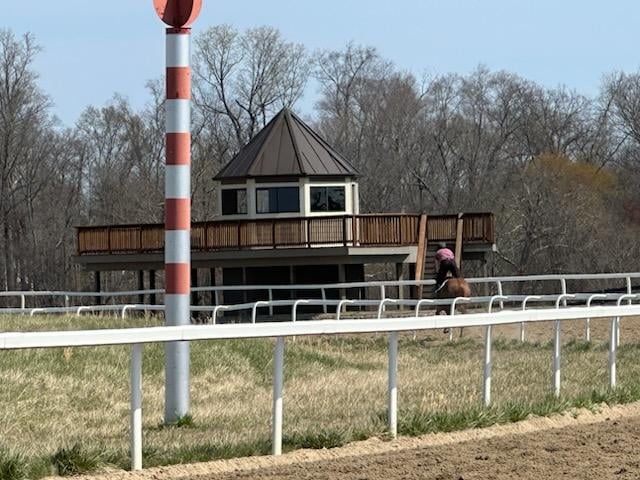
The seven-furlong track at the Middleburg Training Center may be the longest of its kind in Virginia, but the wire is coming up quick.
“We are clearly running out of time,” said Chuck Kuhn, the owner of the northern Virginia facility. “If [horsemen] don’t want it to go to the DOD (Department of Defense), then somebody needs to step up.”
This article contains affiliate links. If you click and buy, we may earn a commission at no extra charge to you.
Pick up reliable and rewarding tickets for major events!
By at least two accounts, Kuhn extended a deadline for an anticipated sale from March 30, and a member of Congress has said he expects the sale to close by the fall. While that move may be seen as promising by Virginia horsemen, it is more tied to the procedural process of a Purchase and Sale Agreement (PSA) tied to a Request for Proposal (RFP). Kuhn had disclosed in late 2025 that he was pursuing a process that could see the United States Army stable and train the Old Guard Caisson Detachment, the horses used in military processions most visible at Arlington National Cemetery.
“We responded to an RFP in 2025,” said Kuhn. “After six months we were informed we were one of the finalists for the bid. Previously the track was not listed for sale.”
Meanwhile, Rep. Suhas Subramanyam (D-VA 10) told constituents April 3 that Army officials have “firm intent” to acquire the 149-acre property.
The Middleburg Training Center is a critical part of Virginia’s thoroughbred infrastructure, with its seven-furlong track and capacity for up to 220 horses. The number of active thoroughbred training centers in Virginia can be counted on two hands.
Located about two miles northwest of Middleburg, the facility sits in one of Virginia’s most horse-centric communities.
“It’s a huge financial impact on the state and local economy,” said Sean Clancy. “It is not the right property for the US Army… We’d like to keep it as a training center.”
Kuhn may not necessarily disagree.
“If a legitimate buyer steps up with a legitimate offer, they need to step up,” he said. “We don’t want to lose our existing buyer… We would love to see it in the hands of the local community, but somebody needs to step up.”
Kuhn reports a nearly $9 million appraisal on the land and says the business value exceeds $3 million. While achieving top dollar may not be the sole motivation, it remains important.
“I remain happy to work with the local equine community but have yet to see a viable offer,” Kuhn said.
At least one proposal is being prepared to preserve the status quo, though, as one horseman put it, “hope is not a strategy.”
Kuhn purchased the property for $1.6 million in 2017, beating a rival residential development bid, and later added a conservation easement. At peak times, the horse population exceeds 150 across eleven barns, with additional horses training there from nearby farms. About a quarter of participants in the Virginia Certified Residency Program have, at one time or another, come through Middleburg.
LISTEN TO THE LATEST OFF TO THE RACES RADIO!
Established by Paul Mellon in 1956, the facility generates more than $8.8 million annually in economic impact and creates up to 150 jobs, according to a 2021 economic impact study by Chmura Consulting.
Kuhn has put money into the facility.
“It was shocking that it was in Middleburg, Virginia,” he said of the condition when he purchased it.
“The base of the track has always been in good shape. The barns were a mess… They did the track and put in the new rail,” said trainer Madison Meyers.
Meyers, who once had about 75 horses stabled there, has reduced to 44 and is focusing more on the racing side amid uncertainty. Her Ballyerin Racing alone generates $45,000 to $50,000 per month in local spending.
“I cut back because I was worried,” Meyers said. “I stopped taking any new clients [for baby breaking].”
With closure, Meyers would likely relocate out of state, while others, like 72-year-old Larry Curtis, may retire.
“At one point there was a waiting [list],” Curtis said. “You couldn’t get a stall.”
Now down to six horses from 30, Curtis added: “The sooner the better because we will need to send the horses elsewhere. He’s done a good job rebuilding the barns.”
Concern has reached Washington, DC.
“If this sale goes through, thousands of jobs and the tens of millions of dollars that benefit the local economy may be lost,” Rep. Subramanyam said on the floor of the US House of Representatives March 26. “So I ask that we slow this process down and consider an alternative site within the region that can appropriately accommodate the Caisson horses and provide a turnkey solution for the Army’s needs.”
“Most support he’s speaking on behalf of his constituents who don’t want to lose it,” said Clancy. “These horses are not staying in Virginia [if the property ceases to be in the Thoroughbred industry]… There is no other facility for them.”
The Middleburg Training Center may have plenty of stables, yet Virginia horsemen are looking for stability.

Pick up reliable and rewarding tickets for major events!
LATEST NEWS