




In Maryland, possibly reaching the right destination
 Frank Vespe
 February 3, 2026

Opinion by Frank Vespe
The remarkable thing about the shambolic demise of the Maryland Thoroughbred Racetrack Operating Authority (MTROA) is that after all the sturm und drang, it appears things may end up where they started – and where most horsemen likely hoped they’d get to.
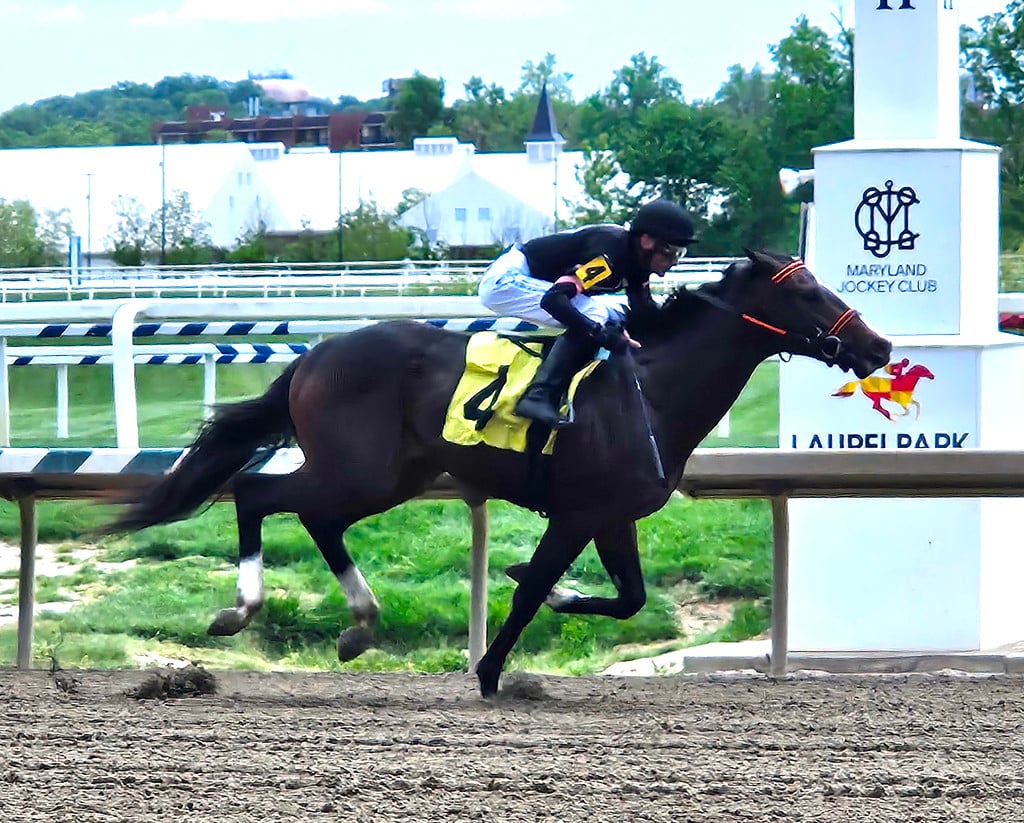
After all that – after the 2020 plan collapsed under its own weight, after the MTROA developed a Pimlico Plus plan one horseman described to me as “the stupidest plan I’ve ever seen,” after the General Assembly blew the MTROA up at the end of the ’25 legislative session – it appears Laurel Park will survive, now as a training center.
This article contains affiliate links. If you click and buy, we may earn a commission at no extra charge to you.
Pick up reliable and rewarding tickets for major events!
Phew.
The MTROA’s demise has been sudden, surprising, and comprehensive. First, the General Assembly shuttered it abruptly, and prior to its initial four-year term was completed.
Then came a damning report from the Office of Legislative Audits, which dinged the authority for what it called “significant deficiencies” in the MTROA’s internal controls and “significant instances of noncompliance with applicable laws, rules, or regulations.”
And now this: the biggest purchase it oversaw, that of Shamrock Farm (which, umm, was bought from the family of MTROA board member Tom Rooney) to be the training center, basically up in smoke. After, of course, approximately $4.5 million of public dollars were spent.
What killed it, the Maryland Stadium Authority (MSA) said, was two things: wildly inaccurate cost estimates from the MTROA and a pesky brown trout living in a waterway on the property that the Maryland Dept. of the Environment said needed to be protected.

Yet while the MSA’s Gary McGuigan called the brown trout the “fatal flaw” in the project, it may also be seen as the straw that broke the camel’s back. That’s because, McGuigan said in a recent hearing, turning the bucolic Shamrock property into a viable training center was fast becoming a financial quagmire.
“The minimum spend in the statute is $110 million for the training center,” McGuigan told Maryland General Assembly’s House Appropriations Committee, which is chaired by Del. Ben Barnes, a Democrat representing Prince George’s and Anne Arundel Counties. “We were looking at north of $210 million.”
The overspend would have resulted from several challenges, including the farm’s hilly topography, water, and lack of public utilities.
And so Laurel’s in the running – again.
You can see why: every dollar beyond $110 million spent on the training center is a dollar less that can be spent on Pimlico. That’s been the longstanding challenge of this project: two complex endeavors and only one budget.
“I think we all kind of could foresee this happening,” Tana Aubrey, trainer Mike Trombetta’s Laurel-based assistant said. “When they were talking about Shamrock, I was, like, ‘That’s a beautiful farm, but there’s too many hills, plus the water.’ There’s just too many ‘What about this?’ and ‘What about that?’”
It’ll cost a lot more to purchase Laurel, perhaps $50 million, it has been said, though terms are still being negotiated. And transforming it into a training center will take some coin, too; a 2022 report by the Maryland Economic Development Corporation (MEDCO) noted, “Backstretch buildings contain minimal to no fire protection systems and minimal HVAC. Consultants have recommended demolishing all.”
Moreover, Laurel has at times faced issues with breakdowns. While conventional wisdom points to the water dotting the property — a problem also facing Shamrock — experience indicates that a properly built and maintained surface can be a safe one at the central Maryland track. The number of fatalities per 1000 starters at Laurel has been below the national average in each of the three full years for which data is available since its 2021 rebuild, according to the Equine Injury Database.
On the plus side, Laurel already has all the racetracks it needs, and if it’s to be a training center – even one used occasionally for brief “festival” turf meets, which would be a welcome addition to the calendar – it won’t need much in the way of public-facing facilities.
Given the way Shamrock was trending, that’s a positive.
Maryland Thoroughbred Horsemen’s Association president Katy Voss, a longtime local trainer, said in a statement, “By preserving and reinvigorating Laurel Park as a premier Thoroughbred training center and aligning it with a reimagined Pimlico, the state and Governor Wes Moore have taken decisive action to preserve a historic industry that has supported Maryland families for generations.”
Frank Perri, a small breeder-owner who lives in Pennsylvania but has bred several Maryland-breds, lauded the Laurel decision as “smart and good news.”
He added, “I was preparing to breed outside of Maryland going forward. Assuming this decision proceeds, I’ll likely foal in Maryland going forward. I think the Laurel surfaces and location make it better for horsemen, trainers, exercise riders, and jockeys.”

Pick up reliable and rewarding tickets for major events!
LATEST NEWS
- Laurel Park picks and ponderings: September 19, 2026

- PODCAST: How’d an $8,000 claimer get to a G1 race?

- Off to the Races Radio lineup for September 19, 2026

- Micanopy gives Simone PA Derby puncher’s chance

- Nazario hoping For the Ladies continues progress

- LRL: Competitive group to meet in Weather Vane