
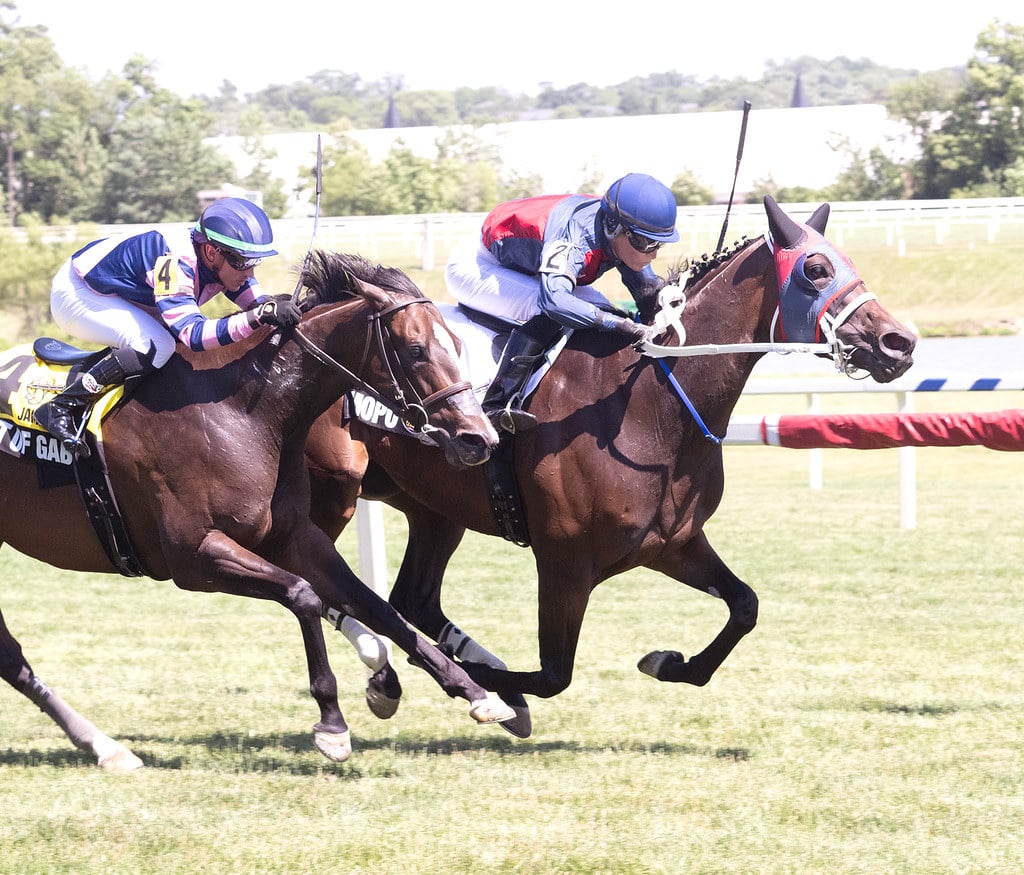



Op-Ed: Midlantic circuit should promote growth, not reductions
 John Piassek
 January 22, 2026

The opinions expressed in this op-ed are the author’s. John Piassek, the Maryland handicapper for The Racing Biz, formerly worked for the Maryland Horse Breeders Association.
In mid-December Michael Musto, the executive director of the New Jersey Thoroughbred Horsemen’ s Association, penned a letter to the editor of the Paulick Report calling for a true Mid-Atlantic circuit.
But the heart of his plan is to slash racing days, which he claims will be the rising tide to lift all boats.
That’s not a recipe for success; it’s a roadmap to putting dozens of breeders and horsemen out of business pronto.
This article contains affiliate links. If you click and buy, we may earn a commission at no extra charge to you.
Pick up reliable and rewarding tickets for major events!
The goal of a unified Mid-Atlantic region should be to encourage growth in every state in the area, rather than dramatically cut their dates. A successful Delaware Park leads to more Delaware-certified horses, boosting that state’s horse industry. A thriving Parx means more Pennsylvania-breds and a strong product in one of the country’s largest metropolitan areas. A healthy Laurel Park ensures a large racing presence in one of the most horse-centric states in the country.
The Mid-Atlantic calendar isn’t perfect, but it currently provides plenty of opportunities for horsemen and for horses of varying abilities to race.
Could it use more coordination? Sure.
In 2025 Maryland, Delaware, and Virginia took some baby steps in that direction during Maryland’s summer break. Maryland and Virginia teamed up to offer numerous combined state-restricted stakes, while Maryland-breds and Maryland horsemen were able to earn state-bred bonus money out-of-state.
If Pennsylvania, New Jersey, and West Virginia were added to the mix during their dark periods, and stallion bonuses were thrown in, it would encourage breeding in every state in the area and ensure there’s some opportunity for breeders to earn money. Still, those bonuses are only applicable for a few weeks, so while they could tide folks over during a shorter break, they’re not a substitute for a full schedule.
That’s one area where nascent cooperation is making a difference, and the future should – in fact, must – hold more of it. Horsemen and breeder groups should identify and work to change laws and regulations siloing each state with a goal of permitting more cross-border cooperation. Tracks should seek ways to incentivize cooperation on racing days and stakes schedules.
That probably would lead to fewer racing dates, and in fact, the future portends such a reduction regardless.
But Musto’s plan foresees 275 dates throughout the region, no racing at all in the winter months, and at least $1 million in purses per date.
Assuming 12 races per racing date, that would mean approximately a 60% reduction in the number of races run in the region.
The problem’s not hard to see.
If Delaware Park’s dates were halved, there’d be less incentive for horses to get Delaware-certified, which would be bad news for the dozens of participating farms. Shrink Monmouth Park’s dates even further, and there’d be fewer chances for Jersey-breds to earn a check, which could well be the end of the Garden State’s beleaguered breeding program.
Cut winter dates in the entire region, and no one would have any money coming in for months – from Dec. 1 through the end of February in Musto’s proposal — unless they wanted to pay the expense to ship to New York or Florida.
Even from a bettor’s perspective, bigger fields are only one part of an improved betting product. If whichever track takes the spotlight still has high takeout and dramatic late odds changes, all the big fields in the world won’t make it an improved product for bettors.
California is a prime example of why contraction isn’t always as good in reality as in practice. 1/ST Racing closed Golden Gate Fields in northern California last June to, in theory, strengthen what was left. While the jury’s still out overall, the demise of Golden Gate and the destruction of the California fair circuit led to just a 5% increase in field size during the 2025 winter-spring meet at Santa Anita. Hardly a trajectory-changing outcome.
In the last 20 years, the number of races conducted at Mid-Atlantic tracks has dropped by 37%: a real-life experiment in contraction. Has that raised the tide? The number of foals bred here has dropped by 60%, and the number of stallions standing here has fallen by 74%.
With fewer chances to race, almost everyone in each state, particularly the working-class and middle-class operations, would earn less money. This would further accelerate the contraction process in each state until only the biggest operations are left, if anyone at all.
Racing can’t slash its way to growth. It has to address the core issues that frustrate bettors, breeders, and horsemen. It has to find ways to stop the bleeding, not increase it.
A true Mid-Atlantic circuit should be about that: growing the pie and increasing opportunities for everyone in a sustainable way.
When it comes to boosting Mid-Atlantic racing, sometimes less isn’t more, less is just less.

Pick up reliable and rewarding tickets for major events!
LATEST NEWS