



Revised N1X condition, ratings races now at Laurel
Hopes are that evolving condition book keeps horses home
 Frank Vespe
 September 30, 2026

One change has already arrived to the Laurel Park condition book, and another lands in the latest book, which covers the month of October kicking off with Friday’s card.
The second change will become evident October 10 when the first first-level allowance of the new condition book is scheduled.
Up to now, Maryland’s first-level allowance condition has been written to permit Maryland-bred or -sired horses to win two allowances — both the state-bred allowance and the open first allowance, in either order – before facing two-other-than company.
This article contains affiliate links. If you click and buy, we may earn a commission at no extra charge to you.
Pick up reliable and rewarding tickets for major events!
Now it will also permit horses that have won Virginia-restricted first-level allowance races to double-dip. That includes Maryland-bred or -sired horses who are also Virginia-certified, who otherwise would not have been able to run back in the open a-other than.
“If the Maryland-bred won the restricted race in Virginia, and they came back, they were no longer eligible for either our a-other-than or our Maryland-bred race,” Maryland Thoroughbred Horsemen’s Association president Katy Voss said. “It’s restoring their opportunity to get two bites at the apple.”
Voss is a longtime member of the MTHA’s purse committee, which collaborates with the racetrack’s racing office to craft the condition book.
In these days of smaller foal crops and fiercer competition for horses, the change can also have the effect of keeping horses home, rather than forcing Maryland-breds based at Laurel to ship out of town to tracks like Delaware Park to find a first allowance condition for which they would still be eligible.
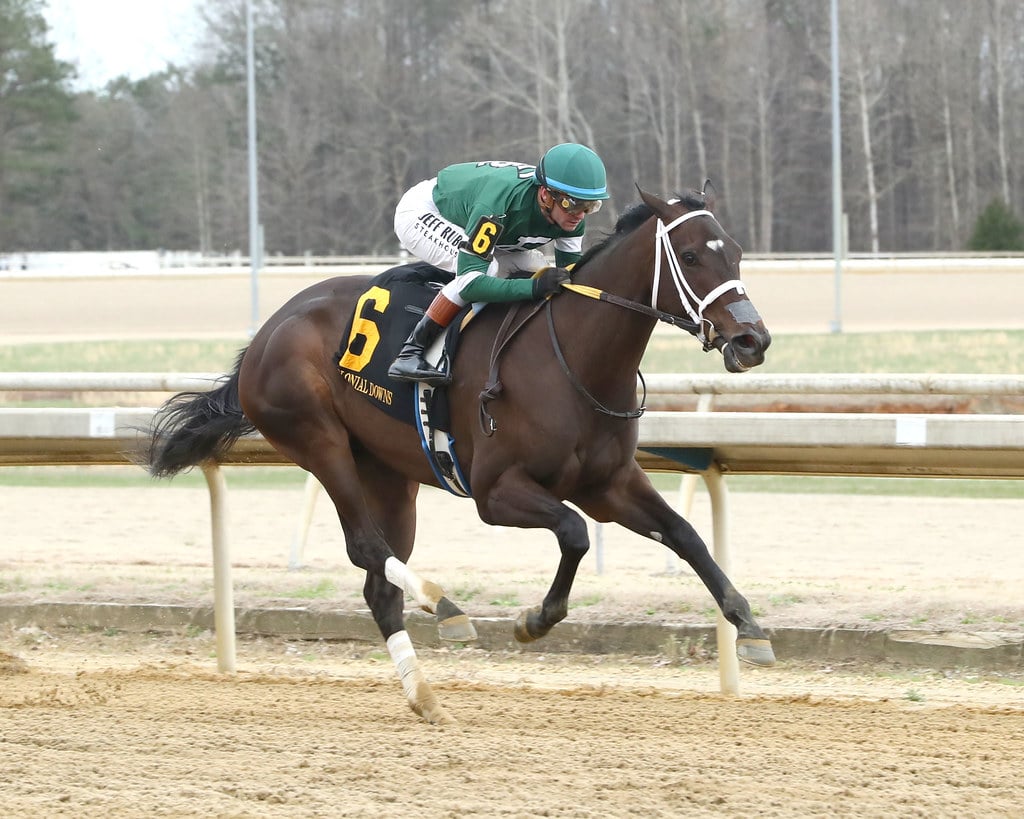
Voss said she found 16 Virginia restricted entry-level allowances that had been run during the recently completed Colonial Downs meet. Of those, five had been won by Maryland-breds and eight went to Virginia-breds.
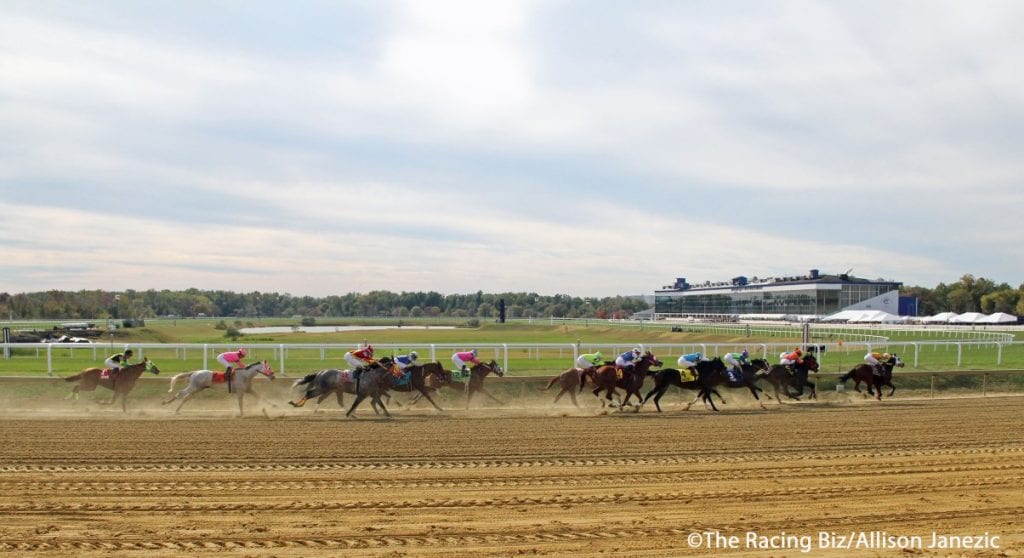
The second condition book change is the “ratings races” that have been proliferating around the country in recent months. These began appearing regularly at Laurel in mid-September.
Those races are based on Equibase’s newish ratings system, which the company describes as “a standardized rating designed to assess and categorize the performance of racehorses across North America.”
This, Equibase says, will help racing secretaries create more competitive race conditions, leading to larger fields.
Maybe. Time will tell on that one.
Laurel has written these races as ratings/optional claiming races, limiting participants to those horses with ratings below a specified amount or those entered for a claiming tag. At Laurel, those have been open ratings up to 65 or $20,000 claimers and ratings up to 75 or $30,000 claimers.
Other tracks have written them as straight ratings races with no claiming tag. Delaware, for example, recently carded a race for fillies and mares with a rating of 65 or less.
The premise of the ratings races has promise. Accurate ratings would allow racing secretaries to augment claiming conditions and permit connections to protect horses they’d like to protect without exposing them to being claimed.
Only one problem: the ratings themselves.
“The idea of the ratings is a great idea, but when they came out with them, the numbers were so bad,” said Voss, who is supportive of the races. “We know they’ve been working on them ever since, and they’re still a long way from being any good.”
But she believes that they are on the improve. Using them should help them become more accurate, she believes, and limiting them to the open claiming ranks – rather than maidens or horses still with lifetime conditions – ought to be the most accurate.
“It’s kind of like, you need to try and experiment with them and see how you can make them work,” she said. “My thought all along has been that if we can correlate them to a claiming price, and so we’re just doing it on the open claiming because those horses have enough form.”
A recent sample of eight ratings races at Laurel and Delaware bears out the concerns. While too small a sample from which to draw significant conclusions, in none of the eight races did the highest-rated horse go off the favorite. In four of the eight races, the post time betting favorite was rated fourth or worse by the Equibase ratings.
On average, the highest-rated horse went off at slightly more than 8-1. And in one case, the highest-rated horse was by any handicapping measure significantly overmatched, went off at more than 20-1, and finished up the track.
“I like it because I just won, but I don’t know where these numbers come from,” trainer Anthony Farrior acknowledged after his class-dropping trainee Petingas Twin won a ratings race.
So: good concept. Still some work to do. Call it one thumb up for ratings races.
Pick up reliable and rewarding tickets for major events!
LATEST NEWS