


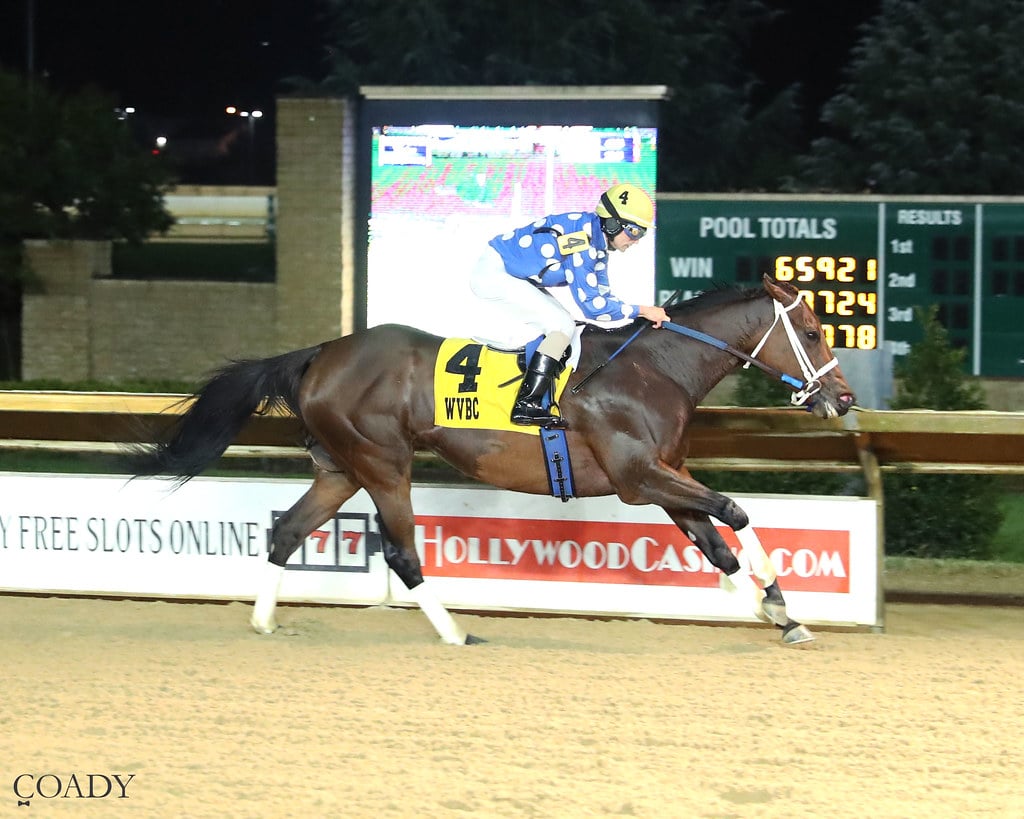


Leading horsemen call for continued Lasix use
Ban set to take effect in May
 The Biz
 February 25, 2026

A coalition of leading Thoroughbred trainers and the head of a national horsemen’s group is urging regulators to base medication policy on veterinary science rather than public perception as debate continues over the use of Lasix.
Under the law that created the Horseracing Integrity and Safety Authority (HISA), Lasix is set to be banned entirely in Thoroughbred racing in late May unless that organization’s board of directors votes unanimously to permit it. Currently, its use is prohibited in two-year-olds and in stakes races.
This article contains affiliate links. If you click and buy, we may earn a commission at no extra charge to you.
Pick up reliable and rewarding tickets for major events!
Hall of Fame trainers Bill Mott and Mark Casse joined Chad Brown, Jena Antonucci, Ron Moquett and national Horsemen’s Benevolent and Protective Association CEO Eric Hamelback in a letter defending furosemide as a regulated therapeutic tool used to manage Exercise-Induced Pulmonary Hemorrhage (EIPH).
The group argues that labeling furosemide, more commonly known as Lasix, a “performance-enhancing drug” ignores its primary purpose: reducing lung bleeding caused by the extreme cardiovascular stress of racing. They note that horses, as obligate nasal breathers relying primarily on nasal breathing, are anatomically vulnerable to EIPH and that furosemide works by lowering vascular pressure, not by creating speed or stamina.
“Eliminating the medication will not eliminate the condition,” the letter states, warning that banning Lasix would remove a veterinary tool proven to lessen the severity of pulmonary bleeding.
While acknowledging the need for integrity and public trust, the authors call for uniform rules, transparency and continued research. And they cautioning that policy driven by optics rather than science risks harming the very horses reform efforts aim to protect.

HORSEMEN’S LETTER
If a human Olympic runner bled into his lungs every time he sprinted, no one would call treatment “cheating.” They would call it medicine.
Yet calls to eliminate furosemide, commonly known as Lasix, from horse racing are often framed as a necessary stand against “doping.” It is a powerful word. It signals integrity. It reassures the public. But when rhetoric outpaces veterinary reality, well-intentioned policy can produce unintended consequences.
That disconnect is at the heart of the debate over furosemide and whether it should be eliminated from the sport entirely. Critics frame its use as a symbol of racing’s excesses. Supporters see something far less sensational: a regulated veterinary tool used to manage Exercise-Induced Pulmonary Hemorrhage (EIPH), a condition that affects all equine and a significant percentage of racehorses during intense exertion.
EIPH has been studied extensively, including by researchers affiliated with the American Association of Equine Practitioners. During high-speed racing, extreme cardiovascular pressures can cause delicate pulmonary capillaries to rupture. In mild cases, bleeding may be microscopic. In more serious cases, repeated episodes can lead to scarring, chronic inflammation, diminished lung function and, in rare instances, catastrophic outcomes.
Horses are obligate nasal breathers. Unlike human athletes, they cannot open their mouths to increase airflow when exertion peaks. The physiological stress generated inside their chest at racing speed is extraordinary. This vulnerability is rooted in anatomy — not in training methods or competitive ambition.
Furosemide’s primary pharmacologic action is diuresis, reducing vascular pressure and mitigating the severity of pulmonary bleeding. It does not create speed. It does not manufacture stamina. It does not alter a horse’s innate ability. It addresses a medical risk associated with extreme exertion preventing pulmonary bleeding that contributes to career longevity.
The term “performance-enhancing drug” carries powerful emotional weight. But preventing internal lung bleeding is not the same as artificially enhancing speed. The science on subtle secondary performance effects remains debated. What is not debated is that furosemide reduces the severity of EIPH.
Eliminating the medication will not eliminate the condition. It will remove a regulated therapeutic tool currently administered under veterinary oversight and strict protocols.
Those of us who work in barns before sunrise understand that stewardship is not a slogan. It is daily accountability for the health and comfort of an animal that cannot advocate for itself. Preventative medicine is a cornerstone of humane care in every other athletic discipline — human or animal. As such, evidence-based policy is imperative, not symbolic prohibition for welfare of the horse.
We recognize that public trust in racing is fragile. Integrity and transparency are essential. That is why we support uniform rules, clear reporting, rigorous veterinary supervision and continued scientific research. If future evidence yields safer or more effective alternatives, horsemen will adapt — as this industry has repeatedly done in pursuit of safety and reform.
Policymaking decisions driven primarily by optics and not science risk undermining equine welfare in the name of appearances.
The question before the Authority Board is not whether the sport must evolve — it must, it is and will continue to. The question is whether eliminating a treatment that reduces lung bleeding serves the horse or simply satisfies a narrative.
Treating pulmonary hemorrhage under veterinary supervision is not doping.
It is responsible care.
And in any reform effort, the horse — not the headline — must come first.
Signed by trainers W.I. Mott, Chad Brown, Mark Casse, Jena Antonucci and Ron Moquett and Eric Hamelback, CEO of the National Horsemen’s Benevolent & Protective Association.
Pick up reliable and rewarding tickets for major events!
LATEST NEWS




Big Heart Racing
26th Feb 2026Olympic athletes aren’t three and four years old. They make choices for themselves. Our horses are not choosing Lasix.
From a breed and breeding standpoint, bleeding is a physical and genetic issue. Period. Lasix is covering up the fact that the current thoroughbred has a genetic flaw. These horses need to be culled from the thoroughbred population, and the only way is to take a tough stance: ban Lasix.
If you remove Lasix, the careers of the lower level horses will end and they can go into their second careers. Fillies/mares who bled should be discouraged from being bred. And stallions who bled should be identified as such. Responsible breeders, who care about the breed would not therefore breed to stallions who were themselves bleeders.
This is the only way to weed out the bleeders. For the sake of our beautiful thoroughbred, we need to take the steps to eliminate the weakness that is far too common in the North American genetic pool. Otherwise we face genetic collapse.
There’s already the troubling genetic fact that too many horses are being bred to too few stallions: inbreeding. Germany and South Africa have already done research in identifying bleeders from specific stallion lines.
HISA needs to be brave.
The Jockey club already tried by limiting the number of broodmares to stallions each year, but that was struck down by the courts because of the lobby and challenge by the big farms.
This is our only shot at getting rid of the genetic flaw of breeding bleeders to bleeders.
The use of Lasix is the cover-up of the real problem: breeding bleeders to bleeders. Eliminating Lasix will result in the natural selection of the survival of the fittest. The bleeders will not be successful, and the non-bleeders will be. Those horses will then be bred and we will eventually solve the bleeding issue.